
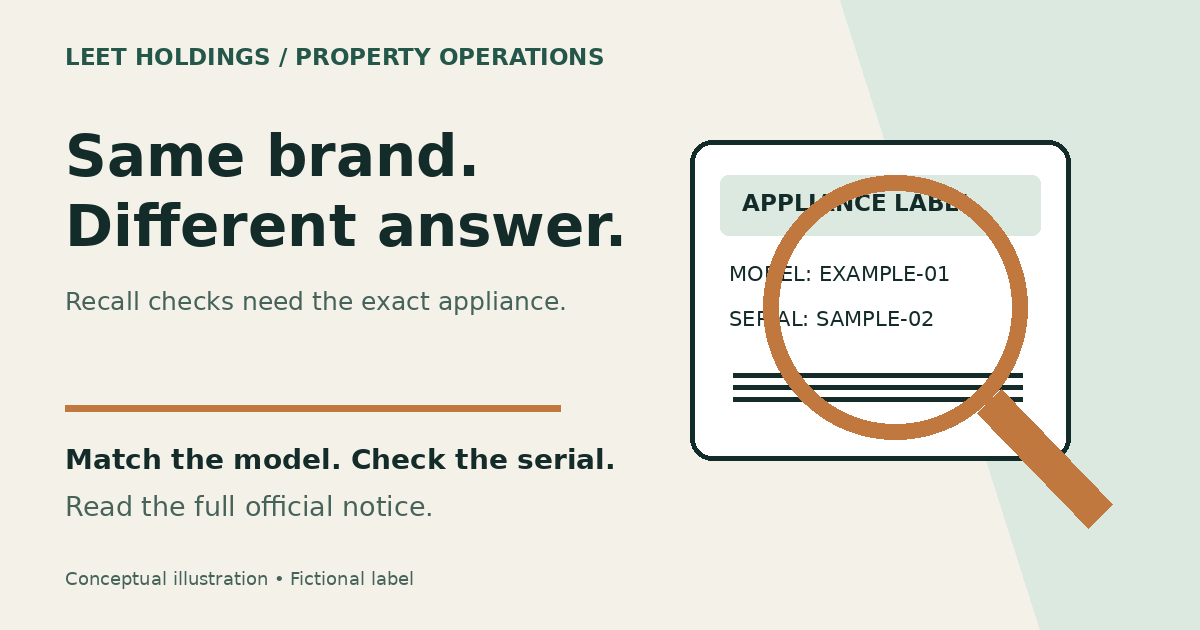
“It is the stainless-steel one” works reasonably well when asking someone to find the refrigerator. It is a poor recall-checking system. Similar-looking products can have different model numbers, manufacturing dates and affected serial ranges. The photograph in a headline is a starting point, not an identification test.
For property owners, the useful question is specific: does this notice apply to this particular appliance, and what does the current official notice tell us to do? Here is a repeatable way to reach an answer without turning a quick search into an unsupported all-clear.
Start with the label, not the listing photograph
Make a small equipment list for the appliances you actually have. Record the product type, brand, complete model number, serial number and any manufacturing or date code visible on the label. Add the room or location so two similar products do not become one ambiguous spreadsheet row. Keep a legible photograph of the label alongside the entry.
Use the manufacturer's instructions to locate identifiers safely. Do not move heavy equipment, remove panels or disturb gas or electrical connections just to complete a row. If an identifier is inaccessible, record that limitation and arrange appropriate help. A blank field honestly marked “not yet verified” is more useful than a number copied from a vaguely similar online listing.
Search the official notice, then read the boundaries
The U.S. Consumer Product Safety Commission's recall directory is a primary starting point for consumer products. Its SaferProducts search also offers brand, model and product filters, with separate report and recall/repair types. A consumer report is not automatically a recall notice; keep those categories distinct.
Open the full notice rather than stopping at the search snippet. Compare every identifier the notice uses, including model suffixes and serial or date ranges. Check whether the market, product description and identifying-label location fit. A brand match alone is insufficient. If a range or code is unclear, use the manufacturer's official recall contact rather than improvising a decoding rule.
A concrete example shows why this matters: the February 6, 2025 U.S. LG electric-range recall notice includes model and serial-number tables and explains where identifiers are located. This is an illustration of the checking method, not a claim that any Leet Holdings property contains affected equipment. Use the current official notice and manufacturer information for any actual appliance.
Separate the search result from the action
Use clear internal status labels. For example: “identification incomplete,” “notice needs manufacturer confirmation,” “matching recall identified,” or “no matching notice found in sources checked on this date.” That last description is deliberately narrower than “safe.” A search result is evidence about a search, not a professional inspection or a guarantee about the product.
When a notice applies, follow its specific safety instructions and remedy process promptly. Do not assume every recall has the same remedy or that a product can remain in service while paperwork is pending. Equally, do not substitute a homemade fix for the official process. Retain the notice link and the manufacturer's response so the next person sees the actual instruction, not a paraphrase passed through three inboxes.
Give unresolved items an owner
A practical tracking row needs only a few additional fields: the source checked, check date, match status, next action, responsible person and completion evidence. Keep personal contact information and full equipment records in an appropriate private location, not in a public property advertisement.
If the manufacturer asks for more information, mark the matter awaiting clarification. If a remedy has been requested but not completed, keep those as separate states. “Email sent” is an event. “Remedy completed” needs evidence. Save the confirmation or service record and connect it to the correct appliance, especially when a property contains several similar units.
Recheck when the equipment changes
Repeat identification and recall checks when equipment is acquired, replaced or discovered during a handover. Choose an ongoing review cadence appropriate to the property and the equipment, and respond to new official notices rather than waiting for that routine review. The CPSC directory notes that remedy information can change, so a saved screenshot should not become the permanent source of truth.
Keep these checks alongside your property maintenance records, while treating recall actions as their own unresolved work until confirmed complete. Have a property opportunity or partnership to discuss? Start a conversation with Leet Holdings. Good operations often begin with an unglamorous detail. In this case, it is the little label nobody photographs until they need it.
Sources checked November 4, 2026. Recheck the current official notice before taking action on any product.