
A property can have a freshly painted wall and a thoroughly mysterious service history. The paint is easy to admire. The mystery is less helpful when a contractor asks what happened last time.
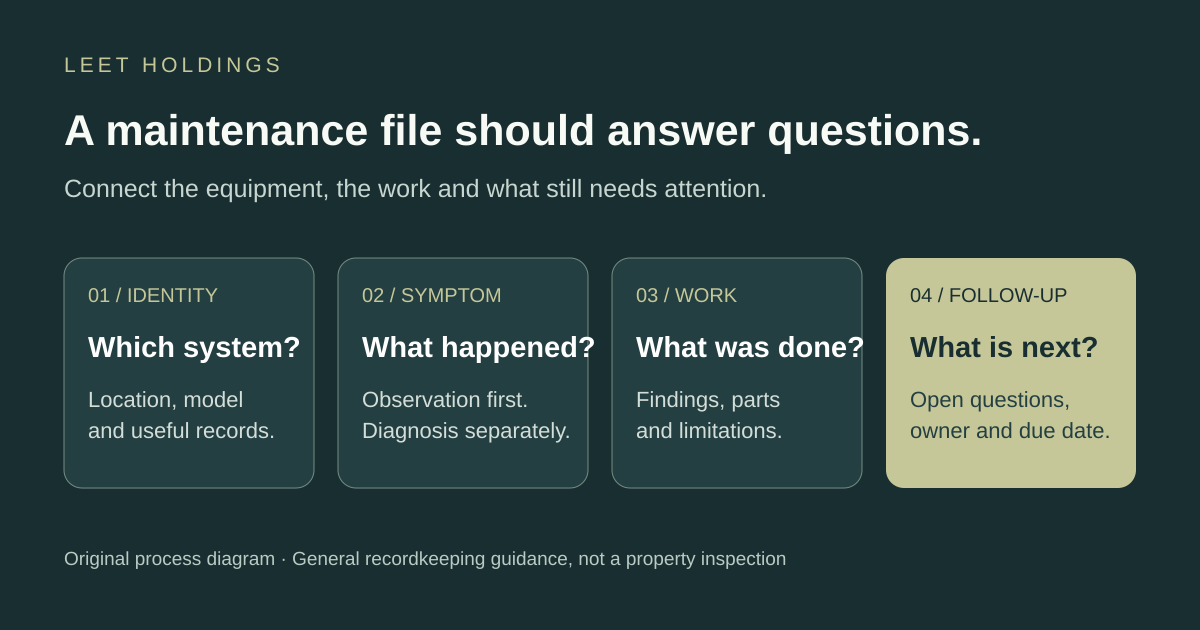
A useful maintenance record is not a folder full of invoices that somebody promises to organize later. It connects equipment, observations, work performed and the next decision. For owners, buyers and property managers, that connection can make a handover more useful without pretending paperwork proves a building is trouble-free.
Give each important system an identity
Start an equipment register for the systems you actually maintain. Record the location, manufacturer, model, serial number where accessible, installation date if documented, and a link to the correct manual. Distinguish a verified date from a seller’s recollection. “Approximately five years old” and an installation invoice are different kinds of evidence.
Use a simple identifier that survives a change of contractor: upstairs cooling system, kitchen refrigerator or west-side water heater. Photograph accessible identification labels only when safe. Do not open energized equipment or enter unsafe spaces to complete a spreadsheet. Missing information can become a specific question for the next qualified service visit.
Keep warranty documents and service contacts with the register. A contact list should identify who handles which system, not leave the next person guessing whether the number marked “Dave” belongs to the plumber or the previous owner’s cousin.
Separate a scheduled task from a completed one
A calendar reminder says work is due. A completion record says what actually happened. Keep both, and do not let checking a box erase the distinction.
For example, ENERGY STAR’s maintenance checklist recommends contractor pre-season check-ups and identifies condensate-drain inspection among typical HVAC maintenance tasks. Those are useful prompts for discussing scope with a contractor, not instructions for an unqualified person to perform electrical, refrigerant or combustion work.
Base the property’s schedule on the relevant equipment instructions, professional advice and applicable requirements. Record the responsible person, due date and expected evidence. A generic annual reminder is not a substitute for knowing which equipment and tasks it covers.
Write down the symptom before the solution
When something goes wrong, capture the date, location, observable symptom and relevant conditions. “Water visible beneath the cabinet after the dishwasher cycle” is more useful than “kitchen issue.” Add photographs when appropriate, keeping people and private possessions out of the frame.
Separate observation from diagnosis. A stain is an observation; identifying the source may require investigation. Record who was contacted, any safety directions they gave and what remained unresolved. An urgent hazard needs an appropriate response, not a more beautifully formatted log entry.
EPA’s moisture guidance emphasizes correcting water problems rather than treating visible mold alone. In recordkeeping terms, this is a reason to track the underlying cause and follow-up, not merely the cosmetic finish. The log is not a mold assessment or permission to undertake remediation yourself.
Ask what the invoice actually establishes
An invoice can establish that a vendor billed for a visit. Whether it explains the condition of the system depends on its contents. Ask for the work performed, relevant findings, parts replaced, limitations and recommended next steps.
Keep the original report rather than copying only the reassuring sentence into a summary. If a contractor could not access part of a system, that limitation belongs in the handover. If additional work was recommended, identify who will decide on it and by when.
A practical record might use four states: reported, assessed, work completed and follow-up confirmed. These are suggested administrative labels, not an inspection standard. The point is to prevent “somebody visited” from quietly becoming “everything is resolved.”
Keep product identification useful after installation
Equipment details also help when a safety notice appears. The U.S. Consumer Product Safety Commission’s recall and product-safety page provides official notices and remedies. Check the actual notice against the product details and follow the stated instructions; a similar-looking product is not enough to determine whether yours is affected.
Record the notice checked, the check date and any applicable remedy or next action. Do not label an item permanently “recall-free.” Notices and remedy information can change. Nor does a recall search establish the overall condition or suitability of equipment.
Make the handover usable, not public
Before sharing records, remove unnecessary personal information and separate access codes, account credentials and occupant details from ordinary maintenance documents. Give authorized recipients what they need through an appropriate channel. Keep originals and identify which version of the summary they received.
A good handover finishes with open questions: missing manuals, unresolved findings, upcoming service and the person responsible for each. Buyers should arrange appropriate independent inspections rather than treating a tidy folder as a condition guarantee.
For a wider review, pair this record with our utility-cost baseline guide. To discuss a property or partnership, contact Leet Holdings. Useful records will not eliminate surprises, but they can stop yesterday’s unanswered question from becoming tomorrow’s expensive guessing game.
Sources checked November 2, 2026. General recordkeeping guidance, not a property inspection, legal conclusion or report of Leet Holdings maintenance results.